Gran was a great reader. She loved murder mysteries, especially Agatha Christie’s. I was an only child, and had spent a lot of time with my Grandparents. Dad was an archaeologist. His work took him all over the world and mum sometimes accompanied him when I was older. Being with my Grandparents was home from home. Later I trained as a teacher and worked with inner city kids. Challenging to say the least, but I loved my job. After my Grandparents passed away, I inherited their house. It was a quaint single-storey cottage in a village near the coast.
The Postman
He leaves his bike beside the hedge and steps up to the door
A barking dog will greet him there, he knows which house it’s at
His bag is full of cheer and shock, they don’t want any more
There’s birthday cards and letters and brown ones on the mat
These Things Happen – Book Launch
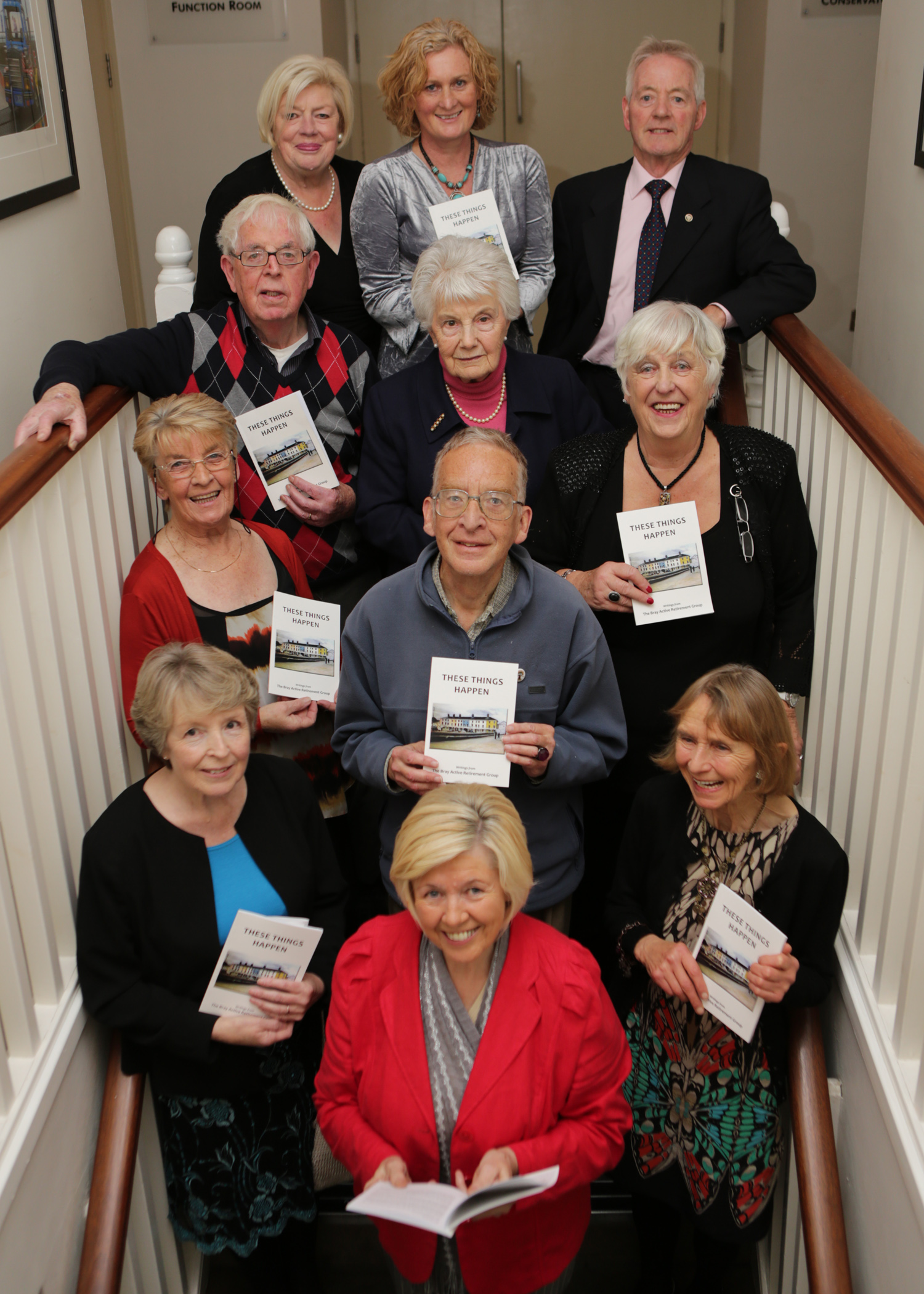
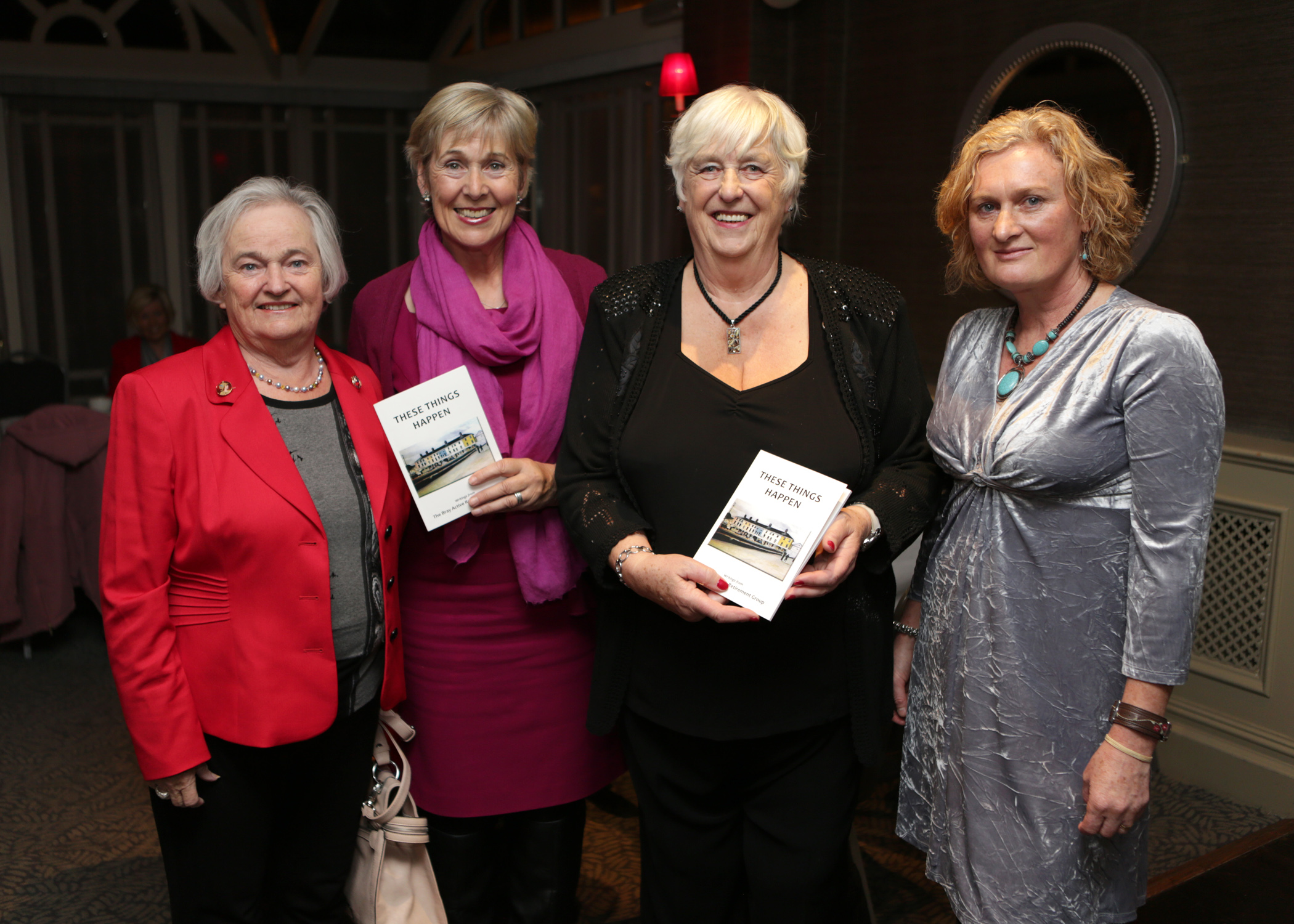
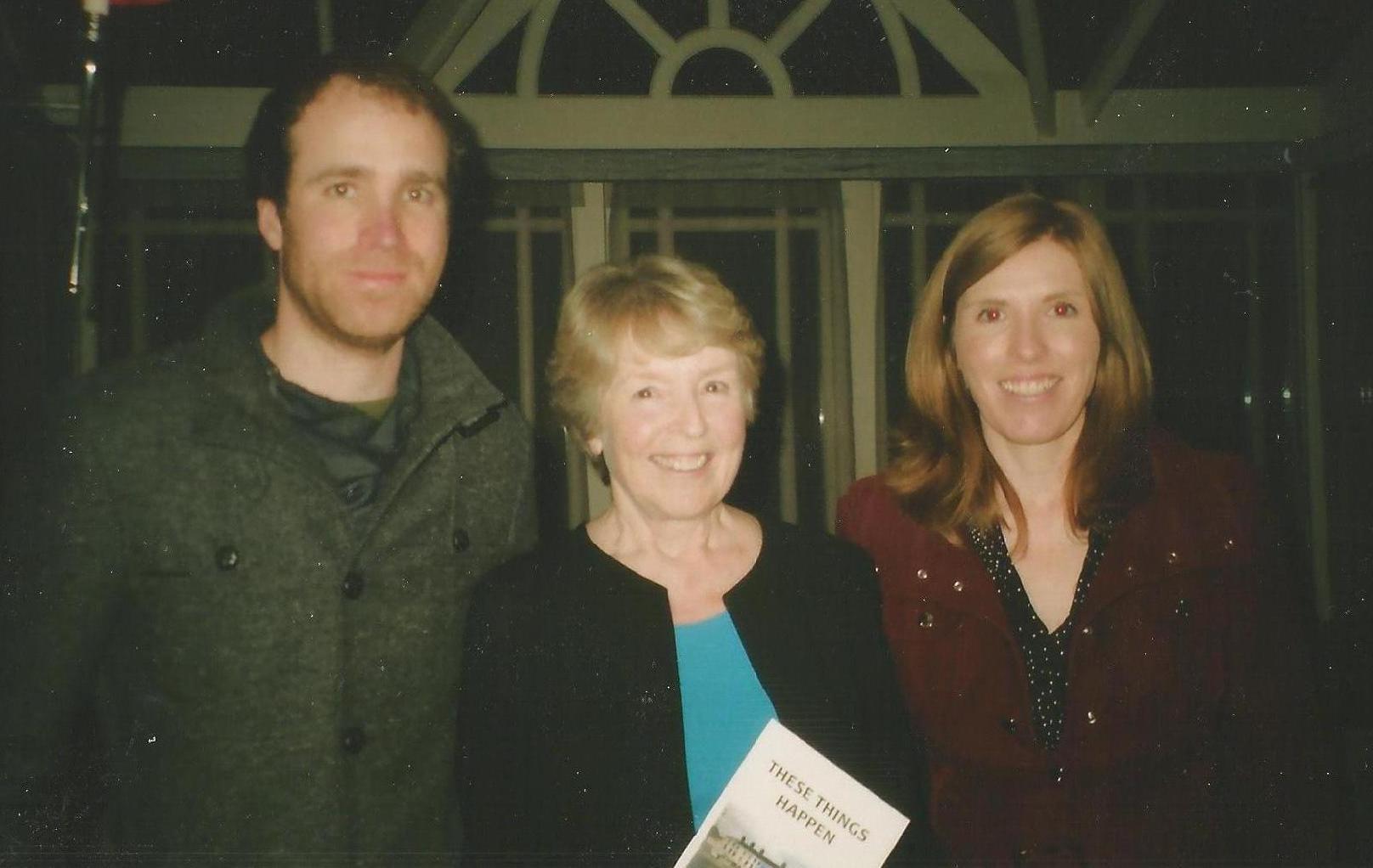
The book launch for the Bray Active Retirement Creative Writing Group took place this Wednesday 13th of November 2013.
Silent Footsteps
Her soft blond hair had been sleeked back into a long plait that reached to her waist. Her blue taffeta dress rustled as she quietly crept up the wooden stairs, creaking beneath her feet. She held her breath. She didn’t want to be seen tiptoeing into her grandmother’s room.
The blinds were drawn but the morning sunshine escaped through the bottom of the bay window, casting shadows around the room. The big bed was covered with a colourful silk eiderdown.
She crossed the room to the dressing table, and touched the perfume bottle, and the soft yellow attachment. It felt like sponge. She couldn’t resist squeezing it and a soft spray of lavender evaporated into the air. She picked up the gold mirror on the shiny surface to see her reflection and gently lifted the brush to her hair. Opening the top drawer of the dressing table, she was disappointed it was empty, but a familiar smell met her nostrils, like mothballs, but something else. She could smell her grandmother’s embrace again, and feel her tenderness.
Our Town
Once like a diamond on the coast
That people flocked to see,
Smart shops and buildings she could boast,
She showed them off with glee
But things were left to slip and slide,
They didn’t feel the breeze,
How could they not have seen the tide
Would bring her to her knees?
We love this town, we need it back,
We yearn for things to change,
We need the beauty, not the tack,
To make her shine again
We have to fight before she’s lost,
We have to make them see
She’ll loose her spirit – at what cost
To her, to you and me?
She’s like a princess in a dream,
Her skirt beneath the shore,
She cannot wait for miracles
Or she will be no more
Josephine Nolan
Surviving the Flood
In 1986 Little Bray was hit by Hurricane Charlie. Myself and my three children, two daughters aged nine and eleven, and my six year old son, were enjoying a normal day. Our house was one of a single storey terrace. Towards evening, a neighbour’s son, Jimmy, called to the door. “You’d better lift carpets and anything you can up off the floor. The river is very high. Block the door with whatever you have”.
I thanked him, and proceeded to jam the bottom of the front door with towels. There wasn’t a lot I could lift except chairs and the television. The children went to bed and I settled down for the evening. The river broke is banks at around ten pm. I went to the children’s bedroom. Our first sign that something was happening, was when our cat high-tailed it to the back bedroom. Water started to seep through the house. “You’d better get dressed” I told them, “and put on your coats”. The girls were in bunk beds, and my son was in his bed by the window. They got their clothes on and we waited. We were all sitting on the top bunk, along with the cat. I thought we might have to climb onto the extension roof. The window was jammed, and I might have to break it. It was dark. The water outside could be higher.
Suddenly, there was a bang and the water was already in the back bedroom, rising fast. Outside we could hear the wind roaring. As we waited, a small piece of paper floated across the water. It was like something torn from a school book or one of the children’s books. On it were the words “the lady from the underwater city will look after you”. “Don’t worry kids, Our Lady will look after us” I said, “but we’d better move up to the front room”. The ceiling in the front of the house was higher. I carried Dylan, as myself and the girls waded through the water, one carrying the cat. “Frisky is digging his claws into my arm” Andrea said. By this time, the water was almost up to my waist. It had come in slowly to begin with, and then just gushed in pushing the towels out of its path. We all sat on a cupboard by the front window. The cat sprang to a ledge higher up. At some stage the lights went out and we sat in the darkness.
We waited through the night. At one stage, as it got lighter, we laughed as a few cartons of yogurt floated from the kitchen and went straight up the chimney. The force of the water had opened the fridge door. I kept watching the bricks on the fireplace, gauging the height of the water. By daybreak, it had begun to recede. It was a very long night. By around nine o’clock the next morning, all that was left was thick watery muck.
I was told the next day the Civil Defence had brought a boat down to evacuate residents. We didn’t hear them. I bought Wellingtons for the children. The nuns at Ravenswell had set up mattresses for those evacuated.
Everything had been destroyed, electrical equipment, carpets, and all my photographs including wedding photos. My eldest daughter’s new school books for her first year in Loretto had been ruined. In the weeks that followed, we stayed with the children’s grandparents who lived on the Vevay Road. The girls went to school while friends helped me disinfect and sweep though the house several times, piling furniture outside for the Council to take away. Thankfully the sun shone on the muck and the destruction.
Josephine Nolan
Expectations
It was 1964, long before the Opera House adorned the landscape of Sydney. The ferry from Manley was taking its passengers to the city harbour. It was thronged with people heading to work or tourists leaning out to photograph the spectacular views. Many were just waiting patiently to get to their destinations, no longer overawed by the scenery.
She sat beside two other girls who had become her friends. She was a striking girl with sallow skin and high cheekbones. Her auburn hair, shaped neatly at the neck, was back-combed on top which added to her height. She was tall, but her slimness and hairstyle made her look even taller. She wore a blue suit with a short fitted jacket and three-quarter length sleeves. Her white handbag matched her pointed low heeled shoes. She could have been dressed for a job interview.
The shadows under her eyes looked darker than usual. The girls talked together as the ferry made its way towards the harbour. Waves splashed up against the sides and the engine hummed gently as it neared its destination. Other ferries from different parts of the suburbs of Sydney were already lined up against the quays, their passengers making their way in all directions. It was going to be another scorcher.
She was more subdued than usual. Her thoughts were on the boy she had come to Australia to marry. He was to meet her off the plane a month earlier but hadn’t shown up. Then she received a phone call asking her to meet him. She was trying to be her usual cheerful self, but part of her was somewhere else, and her smile never quite reached her eyes. She had a firm grip on her handbag, along with the piece of paper with the directions he had given her. She glanced towards the quays as the ferry made its way to its moorings.
It wasn’t a journey she wanted to take on her own. She must have had her reasons.
Josephine Nolan
Something New From Way Back
When home washing machines were first invented, they were just a tub on legs or wheels, with a hand-cranked mangle on top. Later there were the semi-automatics or twin tubs, and in the late 1940s and early 1950s some top loaders were manufactured. The top loaded automatics followed until the front loading automatics started to sell. In the new housing estate where we lived in Roscommon in the early 1970, these were selling like hot-cakes.
Mamuska Night
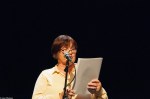
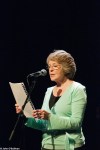
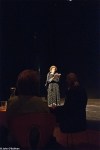
On the 24th of October2014, my fellow writers and I had a wonderful opportunity to read some pieces we had written in a creative writing workshop, facilitated by our lovely teacher Shirley. This time we took part during the “Mamuska Night” at the Mermaid Arts Center, Bray. The cinema was transformed to look like a cabaret, with tables, candles in the centre, and chairs. A jazz band played live during the breaks. It was very entertaining and sometimes unusual. The programme included exotic dancers and mime artists. Our group had a table reserved at the front. When it was our turn, Pat read first, then Elis, then Ann and finally myself. Here are some photographs taken by John O’Sullivan.


-
- Mamushka Night
Mamuska Line-Up!!!!
Co-Hosts – Nick Bryson, Cindy Cummings
Houseband- Miles O’Bog Ensemble
Deirdre Griffin – Contemporary solo
Nadia Gativa – Tribal fusion/contemporary solo
Antje O’Toole – Performance concept contemporary solo
K.E.R.L./Rachel Sheil – Hip-Hop/Street (quartet)
Aleksandra Holesz – Contemporary solo
Ann-Marie Pharaon – Nubian (Egyptian) solo
Little Bray Writer Group – Poems
Liadain Herriott – Contemporary solo
Ciara McKeon – Performance Art solo
Tambourines- Traditional Italian music and dance from Puglia/Heel of Italy
All the Same under the Skin
Whether you go to the outback in Australia or visit many parts of Africa or South America, we see countries primitive in comparison to our own. They wear decorative traditional clothes and sometimes head-dresses. They seem to have a gift for making and blending materials. They wear multi-coloured beads to decorate themselves and have a natural talent for combining fabrics. They often show off that ‘Kodak’ smile to strangers.
Take the Massai People. How tall and elegant they stand in spite of their third world existence. They live mainly in East Africa, Southern Kenya and Northern Tanzania. They graze cattle, goats and sheep on sometimes very arid land until the rainy season. Their houses are made, by the women, of mud, sticks, grass, cow dung and cow’s urine, usually in a circular shape. The women collect water, milk the cattle or goats, and cook. The men, or warriors, take care of security, making sure wild animals don’t break through fences and kill their livestock.
In many of the more primitive regions of the world, imposed government and foreign concepts of development have taken away these peoples natural way of surviving, and in some cases, impoverishing them.
Left to their own devices, they don’t suffer from diseases that afflict Western Countries. Their lives are basic. They enjoy ceremonial occasions. They sing. They dance. They celebrate marriages in their own traditional way, and the birth of a child. They mourn the death of a loved one. Their belief in something greater than themselves sustains them.
We’re not so different after all.
 josephine nolan